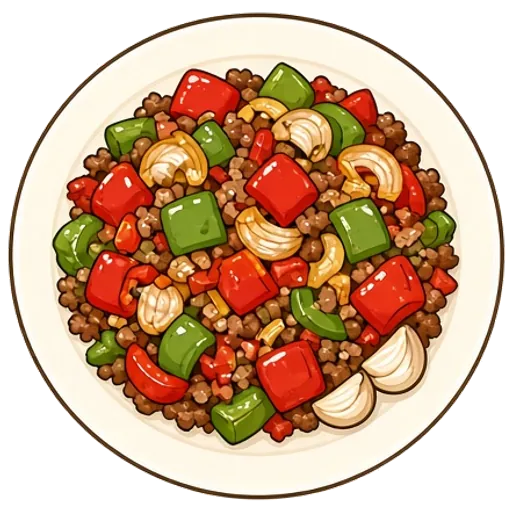
Stuffed pepper skillet
All the flavor of stuffed peppers with none of the stuffing, cooked in one skillet under melty cheese.
- 50 min total
- 25 min hands-on
- Follow-a-recipe easy
- Serves 4
- About $3.74 a serving
- 510 calories
- Good the next day
- Gluten-free

Dolly says: Make the full amount. It’s just as good for lunch the next day.
Ingredients
For 4 servings.
- 1 red bell pepper, diced
- 1 green bell pepper, diced
- 1 yellow onion, diced
- 3 cloves garlic, minced
- 1 lb lean ground beef (90/10)
- ¾ cup long-grain white rice
- 1 can diced tomatoes
- 1½ cups beef broth
- 1 cup shredded mozzarella
- 2 tbsp fresh parsley, chopped (optional)
From your pantry
- 1 tbsp olive oil
- 1 tsp salt
- 2 tsp italian seasoning
- 1 tsp smoked paprika
Each serving has about 510 calories, 35 g protein, 43 g carbs and 21 g fat, and costs about $3.74 at typical US grocery prices. Both are estimates from what the recipe uses.
Missing something?
- No red bell peppers? Yellow bell peppers work.
- No green bell peppers? Yellow bell peppers work.
- No yellow onions? White onions or red onions work.
- No lean ground beef? Ground beef works.
- No long-grain white rice? Jasmine rice or basmati rice works.
- No diced tomatoes? Crushed tomatoes work.
- No beef broth? Bone broth or chicken broth works.
- No shredded mozzarella? Provolone slices work.
- No fresh parsley? Cilantro works.
Steps
Tap an underlined word for a quick explanation.
the peppers from top to bottom, pull out the stems and seeds, and them into ½-inch squares.
Halve. Halving means cutting something into two equal pieces. Even halves cook at the same speed, so one doesn’t dry out while the other finishes.
How you’ll know: The two pieces look like mirror images of each other.
Dice. Dicing means cutting food into small, even cubes, usually a quarter to half an inch across. Pieces the same size cook at the same speed, so nothing burns while the rest catches up.
How you’ll know: Your pieces are little cubes about the size of a chickpea, and they all look close to the same.
 Dolly’s tip: Lay them skin side down. The knife grips the soft inside instead of skidding on the shiny skin.
the onion through the root, it, and it about the same size. the garlic.
Halve. Halving means cutting something into two equal pieces. Even halves cook at the same speed, so one doesn’t dry out while the other finishes.
How you’ll know: The two pieces look like mirror images of each other.
Peel. Peeling means removing the skin with a vegetable peeler or a small knife. It takes off tough or bitter skins, though potato and carrot skins are fine to leave on unless the recipe insists.
How you’ll know: The color underneath is even all over, with no patches of skin left behind.
Dice. Dicing means cutting food into small, even cubes, usually a quarter to half an inch across. Pieces the same size cook at the same speed, so nothing burns while the rest catches up.
How you’ll know: Your pieces are little cubes about the size of a chickpea, and they all look close to the same.
Mince. Mincing means chopping something into the tiniest pieces you can, smaller than a grain of rice. Tiny pieces melt into the dish, so you get the flavor without biting into a chunk of garlic.
How you’ll know: Every piece is tiny and about the same size, and the pile starts to look almost like a paste.
Dolly’s tip: Leave the root end on while you cut. It holds the layers together so they don’t slide apart.Heat the oil in a large with a lid over medium-high. Add the beef, press it flat, and leave it 3 minutes, until underneath.
Skillet. A skillet is a frying pan: wide and flat with low, sloped sides. The shape lets steam escape, so food browns instead of stewing.
How you’ll know: It’s the pan you’d fry an egg in, and a 10 or 12 inch one handles most recipes.
Brown. Browning means cooking until the outside turns brown, which is where a lot of savory flavor comes from. Give food room and time without stirring, or it steams and stays gray.
How you’ll know: The food looks brown rather than gray, and the kitchen smells toasty and savory.
Medium-high heatTimer: 3 min
Break it up, add the onion and peppers, and cook 5 to 6 minutes, stirring now and then, until no pink is left and the vegetables .
Softened. For vegetables it means cooked until they bend and lose their crunch; for butter, left out until it dents easily. Soft onions taste sweet, and soft butter mixes in smoothly.
How you’ll know: Onions squash easily against the pan with your spoon, and butter dents under a finger without looking greasy.
Medium-high heatTimer: 5 min 30 sec
Food safety: Ground beef, pork and lamb are done at 160°F. When it’s cooked through there’s no pink left anywhere in the pan.
Stir in the garlic, salt, Italian seasoning and paprika for 30 seconds, .
Fragrant. Fragrant means cooking until you can clearly smell it, usually garlic or spices, often in about 30 seconds. That’s the moment the flavor is ready, just before it can burn.
How you’ll know: You can smell it from a step back, and garlic is pale gold, not brown.
Medium heat
Add the rice, the tomatoes with their juice and the broth, stir, and .
Bring to a boil. It means heating a liquid on high until it’s fully boiling before you move on. A lid on the pot gets it there faster, which makes it a good moment to chop something.
How you’ll know: Big bubbles break all over the surface, and they keep coming when you lift the lid.
High heat
Turn the heat to low, cover, and 20 minutes without lifting the lid, until the rice is tender and the liquid is soaked up.
Simmer. Simmering means keeping a liquid just below a boil, with small bubbles rising gently. It cooks food evenly and lets a sauce thicken without scorching on the bottom.
How you’ll know: Small, lazy bubbles break the surface every second or so, and nothing is churning.
Low heatTimer: 20 min
Dolly’s tip: If the rice is still firm, add ¼ cup water, cover, and give it 5 more minutes.Scatter the cheese over the top, cover again, and let it sit off the heat for 3 minutes, until .
Melt. Melting means gently heating something solid, like butter or cheese, until it turns liquid. Low or medium heat keeps it from browning or burning.
How you’ll know: It’s smooth and liquid, and butter may foam a little but hasn’t turned brown.
Timer: 3 min
Scatter the parsley and serve straight from the .
Skillet. A skillet is a frying pan: wide and flat with low, sloped sides. The shape lets steam escape, so food browns instead of stewing.
How you’ll know: It’s the pan you’d fry an egg in, and a 10 or 12 inch one handles most recipes.

Plan this in Dollop, and get the grocery list
Dollop puts this dinner on a night that suits your week, lists only what you still need to buy, and walks you through each step while you cook.
More dinners like this
Hearty no-bean beef chili
60 min
Chicken tortilla soup
45 min
Creamy coconut chicken curry
45 min
Turkey chili
55 min
One-pan dinners ›High-protein dinners ›What to make with canned tomatoes and bell peppers ›What to make with rice and bell peppers ›What to make with canned tomatoes and rice ›