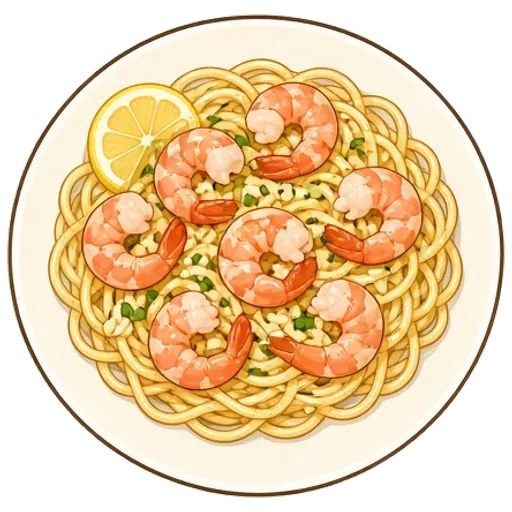
Garlic butter shrimp pasta
Silky, lemony and loaded with garlic, it tastes like your favorite Italian place and is ready in the time the pasta boils.
- 35 min total
- 20 min hands-on
- Follow-a-recipe easy
- Serves 4
- About $3.27 a serving
- 560 calories

Dolly says: Read the steps once before you start. Everything goes smoother after that.
Ingredients
For 4 servings.
- 12 oz spaghetti
- 1 lb raw shrimp, peeled and deveined, thawed if frozen
- 4 tbsp butter, divided
- 6 cloves garlic, minced
- 1 lemon, zested and juiced
- ¼ cup fresh parsley, chopped
- ¼ cup grated parmesan (optional)
From your pantry
- 1 tbsp salt, divided
- ¼ tsp black pepper
- 1 tbsp olive oil
- ¼ tsp red pepper flakes
Each serving has about 560 calories, 35 g protein, 67 g carbs and 17 g fat, and costs about $3.27 at typical US grocery prices. Both are estimates from what the recipe uses.
Missing something?
- No spaghetti? Fettuccine works.
- No raw shrimp? Frozen raw shrimp works.
- No butter? Ghee works.
- No lemons? Limes work.
- No fresh parsley? Cilantro works.
- No grated parmesan? Parmesan wedge works.
Steps
Tap an underlined word for a quick explanation.
Bring a large pot of water over high heat and add 1 tablespoon of salt.
Bring to a boil. It means heating a liquid on high until it’s fully boiling before you move on. A lid on the pot gets it there faster, which makes it a good moment to chop something.
How you’ll know: Big bubbles break all over the surface, and they keep coming when you lift the lid.
High heat
Add the spaghetti, so it doesn’t clump, and cook until , about 1 minute less than the package says.
Stir. Stirring means moving food around with a spoon or spatula so it cooks evenly and doesn’t stick. Unless the recipe says constantly, every so often is plenty, and it gives food time to brown.
How you’ll know: When you drag the spoon across the bottom, nothing is sticking or scorching.
Al dente. Al dente is Italian for “to the tooth”: pasta cooked until tender but with a slight firm bite in the center. It holds up in sauce and keeps softening a little after you drain it.
How you’ll know: Bite a piece a minute before the package time: tender, with a slight firm bite in the middle and no crunch.
High heatTimer: 9 min
the shrimp dry and them with of salt and the pepper while the pasta cooks.
Pat dry. Patting dry means pressing paper towels onto food to soak up the moisture on its surface. Wet food steams instead of browning, so this is how you get a good sear and crisp skin.
How you’ll know: The surface feels tacky, not wet, and the last paper towel comes away barely damp.
Season. Seasoning means adding salt, pepper or spices to bring out a food’s flavor. A little at a few stages tastes better than a lot all at the end.
How you’ll know: When you taste it, it tastes bright and like itself, not flat and not salty.
Pinch. A pinch is what you can hold between your thumb and two fingers, less than an eighth of a teaspoon. It’s a small, forgiving amount, so there’s no need to measure.
How you’ll know: It’s a light sprinkle you can barely see on the food, not a little pile.
Heat the oil and 1 tablespoon of butter in a large over medium-high heat. Add the shrimp in one layer and cook 1 to 2 minutes per side, until pink and opaque.
Skillet. A skillet is a frying pan: wide and flat with low, sloped sides. The shape lets steam escape, so food browns instead of stewing.
How you’ll know: It’s the pan you’d fry an egg in, and a 10 or 12 inch one handles most recipes.
Medium-high heatTimer: 3 min
 Dolly’s tip: Shrimp go from perfect to rubbery fast. Once they’re pink all over and curled into a loose C, they’re done.
Food safety: Shrimp are done when they turn pink and opaque all the way through and curl into a loose C. A tight O means overcooked, not unsafe.
Move the shrimp to a plate. Turn the heat to medium and add the rest of the butter, the garlic and the red pepper flakes, for 1 minute .
Stir. Stirring means moving food around with a spoon or spatula so it cooks evenly and doesn’t stick. Unless the recipe says constantly, every so often is plenty, and it gives food time to brown.
How you’ll know: When you drag the spoon across the bottom, nothing is sticking or scorching.
Fragrant. Fragrant means cooking until you can clearly smell it, usually garlic or spices, often in about 30 seconds. That’s the moment the flavor is ready, just before it can burn.
How you’ll know: You can smell it from a step back, and garlic is pale gold, not brown.
Medium heatTimer: 1 min
Dolly’s tip: Garlic turns bitter if it browns. Pale gold is perfect.Scoop a mug of out of the pot, then the spaghetti.
Reserve pasta water. It means scooping out a cup of the starchy cooking water before you drain the pasta. A splash helps the sauce cling and turn silky, and it’s the step everyone forgets.
How you’ll know: A mug of cloudy water is sitting by the stove before the pasta goes into the colander.
Drain. Draining means pouring off liquid, like tipping pasta into a colander or spooning extra fat out of the pan. Pour hot grease into a can or jar, not the sink, where it hardens and clogs the pipes.
How you’ll know: Only a few drips are left, and the food isn’t sitting in a puddle.
Dolly’s tip: This water is the secret to a silky sauce, so grab it before anything goes down the sink.Pour ½ cup of the and the lemon juice into the skillet and as it bubbles for 1 minute.
Reserve pasta water. It means scooping out a cup of the starchy cooking water before you drain the pasta. A splash helps the sauce cling and turn silky, and it’s the step everyone forgets.
How you’ll know: A mug of cloudy water is sitting by the stove before the pasta goes into the colander.
Scrape up the browned bits. It means loosening the brown bits stuck to the pan with a wooden spoon, usually right after adding liquid. Those bits are concentrated flavor, and they melt into the sauce.
How you’ll know: The bottom of the pan looks clean again, and the liquid turns darker and richer.
Medium heatTimer: 1 min
Add the spaghetti and with tongs until the sauce turns glossy and clings to every strand, adding more if it looks dry.
Toss. Tossing means gently lifting and turning food so everything gets coated, like pasta in sauce or vegetables in oil. It coats every piece evenly without mashing anything.
How you’ll know: Every piece looks glossy or evenly coated, with no dry spots hiding underneath.
Splash. A splash is a small, quick pour, about a teaspoon to a tablespoon. It’s there to loosen or brighten a dish, so the exact amount doesn’t matter.
How you’ll know: The dish looks a little looser or tastes a little brighter, not soupy.
Reserve pasta water. It means scooping out a cup of the starchy cooking water before you drain the pasta. A splash helps the sauce cling and turn silky, and it’s the step everyone forgets.
How you’ll know: A mug of cloudy water is sitting by the stove before the pasta goes into the colander.
Medium heat
Dolly’s tip: Starchy water and butter blend into a silky sauce. Keep tossing and it comes together in about a minute.Return the shrimp and their juices to the pan, add the lemon and parsley, and once more.
Zest. Zest is the thin, colored outer layer of citrus peel, rubbed off on the smallest holes of a grater. It holds the fruit’s fragrant oils, so it adds bright flavor without the sourness of juice.
How you’ll know: You see bright flecks and smell citrus right away; stop when you reach the white layer, which is bitter.
Toss. Tossing means gently lifting and turning food so everything gets coated, like pasta in sauce or vegetables in oil. It coats every piece evenly without mashing anything.
How you’ll know: Every piece looks glossy or evenly coated, with no dry spots hiding underneath.
Low heat
Serve right away with parmesan on top.

Plan this in Dollop, and get the grocery list
Dollop puts this dinner on a night that suits your week, lists only what you still need to buy, and walks you through each step while you cook.
More dinners like this
One-pan lemon shrimp orzo
35 min
Lemony tuna pasta with capers
30 min
Chicken in creamy garlic spinach sauce
35 min
Lemon butter cod with crispy potatoes
45 min
High-protein dinners ›Cozy comfort food ›What to make with pasta and parmesan ›