Kimchi jjigae
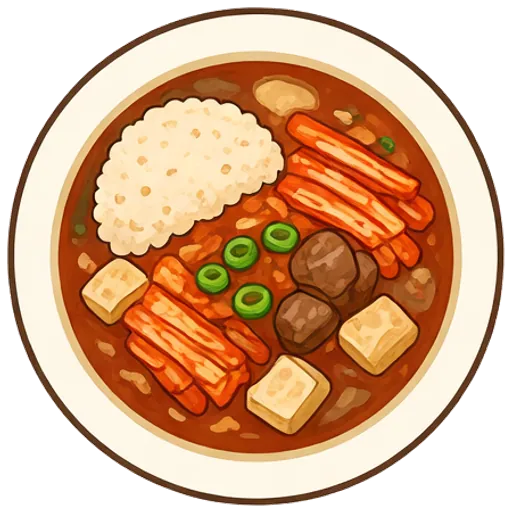
Korea’s everyday comfort stew: sour, spicy kimchi simmered with pork and soft tofu until the broth turns deep red and rich.
- 45 min total
- 25 min hands-on
- Follow-a-recipe easy
- Serves 4
- About $2.75 a serving
- 630 calories
- Good the next day
- Dairy-free

Dolly says: Make the full amount. It’s just as good for lunch the next day.
Ingredients
For 4 servings.
- 1½ cups sushi rice
- ¾ lb pork shoulder, boneless
- 2 cups kimchi, chopped, plus ¼ cup of its juice
- ½ yellow onion, sliced
- 3 cloves garlic, minced
- 1 tbsp gochujang
- 1 package firm tofu, 14 oz
- 2 stalks green onions, sliced
- 1 tsp sesame oil
From your pantry
- 4¾ cups water, divided
- 1 tbsp vegetable oil
- 1 tsp red pepper flakes
- 1 tsp sugar
- 1 tbsp soy sauce
Each serving has about 630 calories, 31 g protein, 70 g carbs and 25 g fat, and costs about $2.75 at typical US grocery prices. Both are estimates from what the recipe uses.
Missing something?
- No yellow onions? White onions or red onions work.
- No green onions? Chives work.
Steps
Tap an underlined word for a quick explanation.
the rice and bring it in a with 1¾ cups of the water.
Rinse. Rinsing means running cold water over rice or canned beans in a strainer while you swish them around. It washes off loose starch and can liquid, so rice cooks up fluffy and beans taste clean.
How you’ll know: The water running out goes from cloudy to mostly clear; it doesn’t have to be perfect.
Bring to a boil. It means heating a liquid on high until it’s fully boiling before you move on. A lid on the pot gets it there faster, which makes it a good moment to chop something.
How you’ll know: Big bubbles break all over the surface, and they keep coming when you lift the lid.
Saucepan. A saucepan is a pot with tall, straight sides and one long handle. It’s for things that need depth, like rice, sauces or a few boiled eggs.
How you’ll know: The food fills it about halfway, leaving room to bubble without spilling over.
High heat
Stir once, cover, turn the heat to low and cook 15 minutes, then leave it covered off the heat.
Low heatTimer: 15 min
the pork as thin as you can, ⅛ to ¼ inch, into bite-size pieces. Wash your hands and the board.
Slice. Slicing means cutting food into flat pieces of about the same thickness. Even slices cook evenly, so none are raw while others burn.
How you’ll know: Lay a few side by side: they’re close to the same thickness from one end to the other.
 Dolly’s tip: Twenty minutes in the freezer firms the pork so it slices thin without sliding around.
Heat the oil in a medium pot over medium-high and cook the pork 3 to 4 minutes, stirring, until no longer pink and a little .
Brown. Browning means cooking until the outside turns brown, which is where a lot of savory flavor comes from. Give food room and time without stirring, or it steams and stays gray.
How you’ll know: The food looks brown rather than gray, and the kitchen smells toasty and savory.
Medium-high heatTimer: 3 min 30 sec
Add the kimchi, onion and garlic and cook 4 to 5 minutes, stirring, until the kimchi softens and smells toasty.
Medium-high heatTimer: 4 min 30 sec
Dolly’s tip: Older, sourer kimchi makes the best jjigae. This is where that jar in the back of the fridge shines.Stir in the gochujang, pepper flakes and sugar for 30 seconds.
Medium heatTimer: 30 sec
Add the last 3 cups of water, the kimchi juice and soy sauce and over high heat.
Bring to a boil. It means heating a liquid on high until it’s fully boiling before you move on. A lid on the pot gets it there faster, which makes it a good moment to chop something.
How you’ll know: Big bubbles break all over the surface, and they keep coming when you lift the lid.
High heat
Turn to low and 15 minutes.
Simmer. Simmering means keeping a liquid just below a boil, with small bubbles rising gently. It cooks food evenly and lets a sauce thicken without scorching on the bottom.
How you’ll know: Small, lazy bubbles break the surface every second or so, and nothing is churning.
Low heatTimer: 15 min
Food safety: Steak, pork chops and other whole cuts are safe at 145°F in the middle, then let them rest for 3 minutes before cutting.
Slice the tofu into ½-inch pieces, slide them in, and 5 minutes, until hot through. Taste and add a splash of soy sauce if it needs salt.
Simmer. Simmering means keeping a liquid just below a boil, with small bubbles rising gently. It cooks food evenly and lets a sauce thicken without scorching on the bottom.
How you’ll know: Small, lazy bubbles break the surface every second or so, and nothing is churning.
Low heatTimer: 5 min
Top with the green onions and a of sesame oil and serve bubbling hot with the rice.
Drizzle. Drizzling means pouring a thin, slow stream over the top of something. A thin stream spreads a little flavor a long way.
How you’ll know: You see thin lines across the food, not a puddle collecting underneath.
Dolly’s tip: Jjigae is even better the next day, once the kimchi has had time to soak in.

Plan this in Dollop, and get the grocery list
Dollop puts this dinner on a night that suits your week, lists only what you still need to buy, and walks you through each step while you cook.